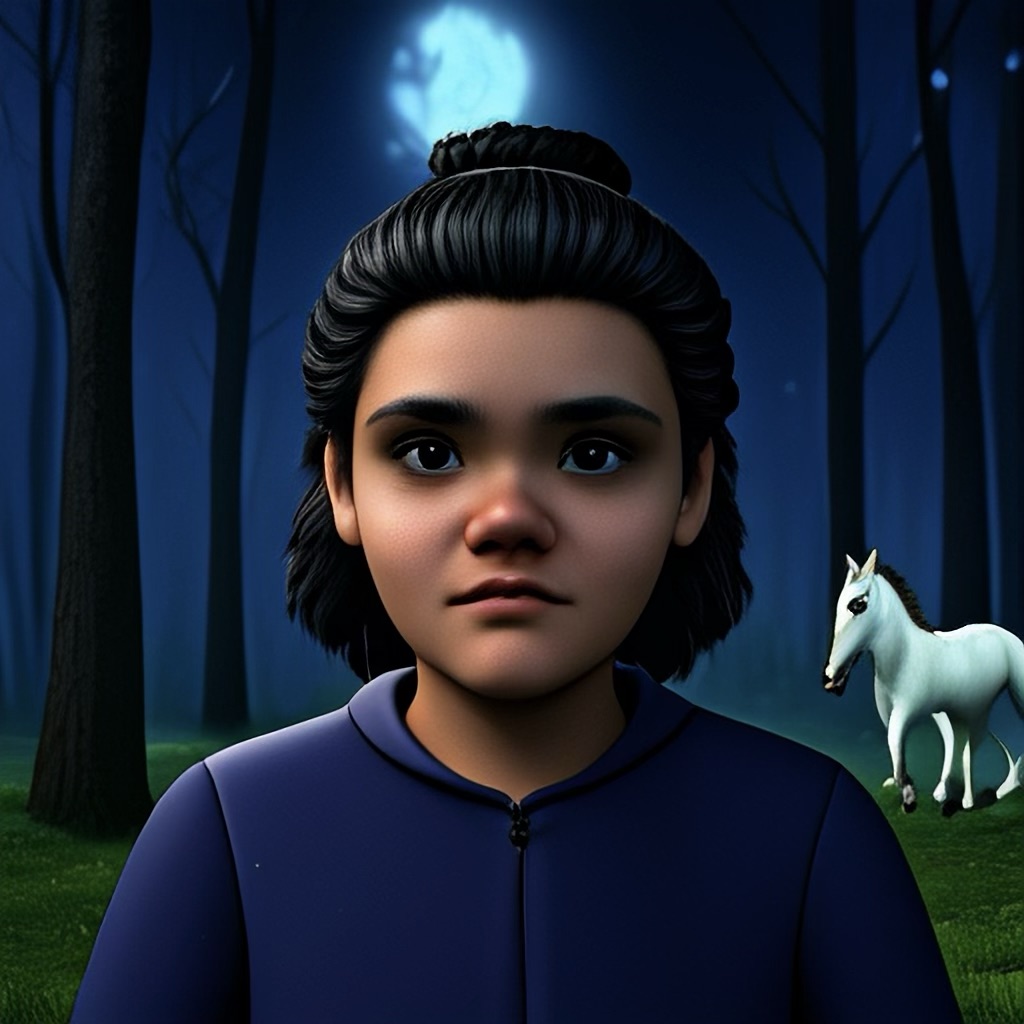
A Thriller Short Story by Felina Silver
The woods were deathly silent.
Sixteen-year-old Jessica crouched behind the gnarled trunk of a massive elm tree, her breath misting in the freezing air. A brittle crust of ice cracked beneath her trembling feet. The cold had arrived suddenly, blanketing the forest floor with a thin, deceptive sheen that glittered under the last traces of daylight.
She never should’ve gotten off that bus.
But the substitute driver had panicked—lost, disoriented, muttering under his breath. When she asked where they were, his nerves snapped. “Off. Now,” he’d barked, his eyes darting in the rearview mirror like something was chasing him. Alone, uncertain, and conditioned to obey adults, Jessica complied. The door hissed shut behind her, and the bus vanished into the dusk.
Now darkness was swallowing the woods whole.
She moved slowly, ice crunching with every cautious step. The shadows between the trees seemed to shift as if watching her. She tried to stay calm, but terror clawed at her chest. Her phone was dead. Her jacket too thin. Her mind repeated one phrase:
Don’t go into the woods.
Her grandmother’s warning rang in her ears now, too late to matter.
Twenty frozen, miserable minutes passed before a faint glow appeared in the distance. Hope surged. A light—maybe a house, a road, someone. She followed it, weaving between trees. But as she neared the light, the air thickened with a rancid stench—sour, metallic, and decaying. Her stomach twisted.
Then she saw it: a small, warped wooden cabin. Its single window flickered with dim orange light. But something about it didn’t sit right. Jessica hesitated, instincts screaming at her to run.
She didn’t get the chance.
Pain exploded at the back of her skull, and everything went black.
She awoke on a stone-cold kitchen floor. Her body ached. She wasn’t bound, but her limbs were stiff, curled tight like a discarded doll. She scrambled to her feet, heart pounding. The room was dim, its corners lost in shadow. Every instinct screamed get out.
Then she heard it—faint, rhythmic, mechanical. A saw. Followed by muffled screams. And then—scratching. Clawing. From the basement.
She bolted to the front door, but it exploded open before she could touch the knob, slamming back on its hinges with a force that shook the house.
A figure stood silhouetted in the doorway.
He was monstrous—tall, twisted, draped in tattered brown robes and thick torn tights. Blood soaked his arms and face, glistening in the firelight. In one hand he held a torch, in the other, a sword drenched in something dark and dripping.
Jessica froze.
The creature spoke, rapid and frantic, his voice deep and garbled. The words made no sense, but something in his tone wasn’t threatening—it was desperate. Before she could react, he scooped her up like she weighed nothing and flung her across the back of a waiting horse.
A white horse.
Its coat was flawless, its mane golden like sunlight. Despite the rider’s bloody appearance, the horse remained untouched—pure. Its eyes met Jessica’s for a fleeting moment. They were deep black… but kind.
Without a word, they rode.
They tore through the woods, hooves crunching over bones and scattered skulls. Jessica clung to the creature’s back, too scared to scream, too frozen to cry. Behind them, the darkness receded. The rotting stench, the bones, the oppressive air—all faded.
After what felt like hours, they emerged from the trees into a clearing bathed in golden light. Warmth hit her skin for the first time in what felt like forever. The horse slowed to a halt.
The creature leapt down and extended a hand.
Jessica took it, sliding gently to the ground. She looked into his eyes—and gasped.
They were changing.
Slowly, before her, the monster unraveled. The blood evaporated. His misshapen face reshaped itself. The torn robes melted into a pair of clean khakis and a sky-blue polo shirt. The horse vanished—replaced by a sky-blue vintage Chevy Mustang, gleaming in the moonlight.
Jessica stared, breathless.
The boy—now human, and strikingly handsome—smiled. “My name is Jason,” he said, his voice smooth, kind. “Thank you for breaking the curse.”
Her mind raced. She didn’t understand. But she stepped forward and kissed him lightly on the cheek—thank you. At that moment, his transformation completed. His eyes sparkled with relief.
Jason explained everything. How, five years ago, he too had wandered into the woods during a school trip and never made it out. How the woods were cursed—haunted by a creature called the Innidenti, a beast that fed on the blood of the young. And how standing beneath the great elm tree after dark triggered the curse—trapping souls, twisting their bodies, stealing their hearts.
He had been trapped ever since.
“The curse,” Jason said quietly, “only breaks when you risk your life to save someone else… and they love you enough to kiss you.”
Jessica said nothing. Her hands trembled.
“What was that thing in the basement?” she asked.
Jason didn’t answer. But she noticed he no longer carried the sword. Her eyes searched his. He offered only a gentle smile, and an urgency to leave.
They drove in silence, passing the old signs of home. Lights. Traffic. A 7-Eleven.
They pulled into the parking lot and called their parents. Relief flooded her body like a wave. Help was coming.
But even as Jessica clutched the phone, one thought chilled her to the bone:
What if the substitute bus driver hadn’t been confused at all? What if he had intentionally left her at the tree? What if he was the Innidenti… in disguise?
A hunter… searching for prey.
And she had almost fed it.
Jessica didn’t sleep for three nights.
Even with the comfort of her own bed, warm food, and the endless stream of well-meaning questions from her parents, she couldn’t shake the feeling that something had followed her back.
Jason was staying with relatives nearby while things were “sorted out.” He texted occasionally, though his tone was different now. Distant. Polite. The kind of polite that felt like an apology.
Every time she asked about the cabin, or the basement, he deflected. “It’s over, Jess. That’s what matters.”
But something still clawed at her memory. The scratching in the basement. The sawing. The voice of the monster—Jason—before he changed. It had been desperate, yes.
But… afraid?
On the fourth night, Jessica finally dreamed.
She stood again in the cabin kitchen. The shadows were thicker this time, breathing in and out like lungs. The floorboards pulsed under her bare feet.
Then, from the shadows, a voice whispered—not loud, but close.
“He was not the first.”
She spun. No one there.
“He was only the last… to fall.”
Her hands shook. A shape emerged from the corner. Tall. Elegant. Moving like smoke. Not monstrous—not exactly. The figure was draped in a long, colorless coat that shimmered like beetle-shells, its face obscured beneath a mask of bone-white porcelain. Twin black eyes peered out, reflecting Jessica’s fear with perfect stillness.
“I wear many faces,” the thing said softly. “Even the ones that smile.”
Jessica tried to scream. But the room melted around her.
She woke up gasping, heart hammering, the sheets soaked with sweat. Her bedroom window was open, though she hadn’t touched it. The curtain fluttered in the warm breeze, and something small sat on her windowsill. She was afraid to move but if she didn’t she wouldn’t have seen the single acorn. Split clean down the middle.
She stared at it for a long time as if frozen in time or locked in a trance.
Two weeks later, she returned to school.
Everyone had questions. Most assumed she’d run away for attention. Some blamed Jason. Her teachers offered shallow comfort and quiet concern. But no one mentioned the bus driver so as not to trigger any unnecessary reactions.
But, Jessica couldn’t go without asking.
She asked the front office who had driven Bus 12 that day. The receptionist looked confused. “We didn’t have a substitute that week,” she said. “Mr. Levine’s been driving that route since May.” Why do you ask?
Jessica’s stomach turned. “Are you sure?”
The woman checked. Flipped through records. “Yes. No changes. See?” She turned the monitor so Jessica could see the manifest.
There was no mention of a substitute.
No record of Jessica ever getting off the bus.
Her name was marked: absent.
That night, she received a package on her doorstep.
No return address. Just a plain black box, tied with twine. Inside was a single item:
A driver’s cap. The same kind the substitute had worn. Stained with something dark near the brim.
Underneath it, a note. Handwritten in looping ink, each word sharp and careful:
“Thank you for finding him for me.
He was very hard to break.
But he’s mine again now.”
—I.
Jessica dropped the box and ran.
Somewhere deep in the woods, under the roots of a twisted elm, the Innidenti watched through the eyes of a hundred stolen creatures. It whispered through the hollow trees and the ringing wind. It wore new faces now—cleaner ones. A clerk. A counselor. A charming boy with golden eyes and a laugh that makes you forget things.
It is patient.
It is kind.
It is always invited.
And it never, ever forgets a kiss.
Chapter Two: The Elm’s Shadow
The nightmares had stopped.
At least, that’s what Jessica told herself.
Three months had passed since the box appeared on her doorstep, and nothing else had happened. No whispers in the walls. No strange packages. No shadows watching her window.
Life, as much as possible, had gone back to normal.
Until tonight.
It started with a sound — soft, deliberate, almost polite — a knock.
Three times.
At 3:03 a.m.
Jessica’s phone screen glowed on her nightstand. 3:03. She froze under the covers, listening. The house was still. Her parents were out of town for the weekend, visiting her aunt in Maine. She was alone.
It’s just the wind, she told herself.
Then came the second knock.
This time, closer.
The sound didn’t come from the front door. It came from her closet.
Jessica sat up, heart hammering. The closet door stood slightly ajar. She could see her reflection in the mirror opposite her bed — wide eyes, pale skin, hair tangled with sleep.
Behind her reflection, in the narrow gap of the closet door, something moved.
“Jason?” she whispered before she could stop herself.
Silence. Then, a faint creak.
Her hand shook as she reached for her phone and turned on the flashlight.
The beam quivered as she aimed it toward the door.
Empty clothes. A pile of shoes. Her backpack.
No one there.
Then she noticed something that hadn’t been there before:
A bus pass.
Old, laminated, the name faded but still legible under the plastic.
Jessica H. Vale. Bus 12.
Her own name.
Except… she’d never had a laminated pass. And she hadn’t been “Jessica H. Vale.” Not ever. Her last name was Vance.
She backed away, pulse thudding. The light flickered. And in the second between dark and bright, she saw it — etched across the back of the pass in tiny black ink:
“Next stop: Home.”
The phone light died.
And from somewhere inside the closet, a soft, mechanical hiss — like a door opening — filled the room.
When Jessica came to, it was daylight.
She was sitting upright in her bed, clothes changed, sheets smoothed, her hair braided neatly like someone had tucked her in.
On her nightstand sat another acorn — this one whole, sealed shut.
Downstairs, her phone buzzed with a new message.
Jason: Don’t take the bus today. Please.
Her stomach turned cold.
She typed back, hands trembling.
Jessica: What’s happening? Where are you?
No response.
At 7:10, she heard the unmistakable squeal of brakes outside her window.
Bus 12 waited at the curb, idling, empty except for the driver — a shadowed figure in a cap, smiling faintly through the glass.
The stop sign swung open. The door hissed wide.
“Come on, Jessica,” the driver’s voice called.
It was warm. Familiar.
Almost comforting.
Her phone buzzed again.
Jason: It’s not me.
The voice outside grew sharper.
“Don’t make me come get you.”
And beneath the floorboards, deep and steady, she heard it again — that scratching, that sawing — as if something beneath the house was building its way back up.
Jessica backed away from the window.
The air grew colder. The light dimmed. The acorn on her nightstand split cleanly in two with a soft crack.
She didn’t know where to run — only that she had to move now.
Because somewhere, on the edge of hearing, just above the growl of the idling engine, the Innidenti was whispering through the trees again:
“The woods remember their own.”
Chapter Three: The Bus That Waited
The bus door stayed open.
Hissing softly. Waiting.
Jessica stood frozen by the window, the phone shaking in her hand. It’s not me, Jason’s last message glowed on the screen like a warning written in fire. She didn’t dare look again — afraid the words would vanish, or worse, change.
Outside, the air shimmered like heat, though the morning was cold. The engine’s low rumble vibrated through the floorboards, through her bones.
And beneath it — beneath everything — that faint, rhythmic scratching continued from somewhere below the house.
She backed away from the window.
Her voice barely broke a whisper. “Not again.”
She slipped into jeans and a hoodie, grabbed her bag, and tiptoed to the front door. Maybe she could slip out the back, cut through the neighbor’s yard, and call for help from there.
But when she reached the hallway, she froze.
The front door stood wide open.
And on the welcome mat — muddy footprints. Small ones. Child-sized. Leading outward, not in.
Jessica’s breath hitched. “What…?”
The phone buzzed again. A new message.
Not from Jason.
Unknown: Running is rude. You got off once. Don’t make us come get you.
The light flickered overhead. Every bulb in the house began to hum, a faint electric whine that grew sharper with each second. The television turned itself on — static, no signal — and within the white noise, she could hear faint laughter. Children. A chorus of them.
She bolted for the back door.
But as she reached for the handle, the wood beneath her feet shuddered. The floor buckled. The scratching sound below turned into a rending, as if claws were tearing through wood and soil and time itself.
A voice rose up through the cracks — low, guttural, hungry.
“Next stop.”
The floor split.
Jessica fell.
She hit dirt. Cold, wet, alive. The air reeked of rust and rot. The only light came from above — a weak gray shaft pouring through the splintered boards of her living room. She scrambled to her feet, gagging at the smell.
She wasn’t in a basement.
She was in a tunnel.
It stretched endlessly in both directions, carved through the earth by something that hadn’t cared about straight lines or human hands.
And along its walls — glistening in the half-light — hung mirrors. Dozens of them. Old, cracked, streaked with grime.
In each mirror, her reflection was different.
In one, she was a child.
In another, she was older — pale, hollow-eyed.
In another, she wasn’t her at all.
A girl with the same face but darker eyes stared back at her. Lips parted. Smiling.
“Welcome back,” the reflection whispered.
Jessica stumbled backward. Her phone buzzed again.
Jason: Don’t look at them. Keep walking. Follow the humming.
She hesitated. “Jason?” she whispered aloud, but her voice echoed wrong — delayed, distorted. As if something else had spoken with her.
The humming grew louder. She followed it, heart pounding, until the tunnel opened into a cavern.
At its center sat the bus.
Bus 12.
Its lights glowed weakly, flickering like dying stars. The driver’s cap lay on the dashboard. The seats were filled — but the passengers were wrong.
Dozens of them. Children. Teenagers. Some in uniforms. Some in tattered clothes from another decade. All still. All facing forward.
Each wore the same expression.
Peaceful. Dreaming.
Jessica took one step closer — and gasped.
In the back seat, half-shrouded in shadow, sat Jason.
His head rested against the window, eyes closed. His skin looked… gray. His hands were clasped tight around something small and wooden — an acorn. Whole. Sealed.
“Jason!” she cried, running toward him.
The moment her foot crossed the bus’s threshold, the doors slammed shut. The engine roared to life. The radio crackled.
“Next stop,” a voice sang through the static.
“Forever.”
The bus lurched forward, wheels grinding against the tunnel floor, moving though there was no road to drive on. Jessica clawed at the windows — they wouldn’t break. The mirrors outside the glass reflected endless copies of herself, each screaming silently.
Jason’s eyes fluttered open.
But when he looked at her, they weren’t his eyes anymore.
They were black.
Endless.
“You shouldn’t have kissed me,” he said softly.
The bus began to sink. The world outside blurred into liquid darkness. Jessica screamed as the acorn in Jason’s hands cracked open — and inside, something blinked.
Above ground, in the empty driveway, the real world moved quietly on.
The bus was gone.
Only two things remained on the doorstep:
A laminated pass.
And a note, written in looping ink.
“Home is wherever I’m driving.”
Signed simply:
— I.
Chapter Four: The Route Beneath the Roots
The bus didn’t fall.
It sank.
Slowly, deliberately, as if the earth had turned to water and swallowed it whole. Jessica’s screams died in her throat. Outside the windows, the tunnel dissolved into blackness so thick it looked solid. The only light came from the dim, buzzing bulbs lining the bus ceiling — and even they flickered like they were breathing.
Jason sat motionless beside her, head tilted toward the glass. His reflection blinked even when he didn’t.
“Jason,” she whispered. “Please. Wake up.”
No response.
The driver hummed softly under his breath, an old tune — the kind of lullaby sung by someone who’d forgotten the words. His hands gripped the wheel too tight. The veins on his knuckles pulsed like roots.
The intercom crackled to life.
“Next stop,” it hissed.
“Memory.”
Jessica turned toward the aisle. Every passenger’s head snapped in unison — a hundred blank eyes focusing on her.
Her heart stuttered.
They began to whisper.
Low at first, then louder. Her name, over and over, in different voices — Jessica, Jessica, Jessica — until it was a chorus, a storm.
She clutched the seat and shouted, “What do you want from me?”
The driver laughed — soft, almost kind.
“We don’t want,” he said. “We remember.”
The bus stopped.
Outside was no longer a tunnel but a forest, bathed in gray light. The trees rose impossibly tall, their trunks split open like wounds. From each, something pale hung inside — faces. Dozens of them. Hundreds. Some she recognized. Her classmates. Teachers. The bus driver who’d “disappeared” years ago.
All staring.
All whispering.
She pressed her forehead against the cold glass. “Where am I?”
Jason finally turned to her. His voice was gentle, human again — but it trembled.
“You’re on the Route. The place between leaving and being taken.”
“The Innidenti?” she asked.
Jason nodded once. “It doesn’t hunt, Jess. It collects. Every time someone forgets their way out, it adds another stop.”
Jessica looked out again. A wooden sign leaned crooked in the soil just beyond the glass. The letters had been burned into the wood:
“Elm Hollow — Population: Remembered.”
Her breath hitched. “I don’t belong here.”
“You do now,” Jason said quietly. “You kissed me. You broke my curse. That bound us both.”
She stared at him, disbelief turning to dread. “You knew.”
His eyes glistened. “I hoped I’d be free. But it doesn’t free anyone. It only trades faces.”
The lights flickered. The bus doors yawned open. The forest exhaled — a sound like a thousand sighs released at once.
“Time to walk,” the driver said.
Jessica hesitated. “Where?”
He smiled, lips stretching too far. “Home.”
The passengers rose in unison, shuffling down the aisle. Their movements were stiff, mechanical, like puppets on invisible strings. Jason reached for her hand.
“You can still go back,” he whispered. “But you’ll have to leave me here.”
“What happens if I don’t?”
He looked toward the driver’s mirror. In its cracked surface, Jessica saw not her reflection — but the Innidenti.
Its true face.
It had no mouth.
No eyes.
Just endless folds of pale, shivering skin, shifting and reshaping — every face it had ever worn moving beneath the surface.
Jason’s voice broke. “It wears what we love. That’s how it feeds.”
The driver chuckled, turning the key. “And she’s so full of love.”
Jessica lunged for the emergency exit. The window didn’t break — it melted, the glass stretching like plastic. She pushed through, falling into the cold gray mud of the forest. The air burned in her lungs, thick and metallic.
Behind her, the bus began to dissolve into the trees. The passengers’ bodies crumbled into white dust, their whispers echoing like echoes through the wind.
Jason reached her, clutching her wrist. “Go, Jess! Before it finds another face!”
She looked into his eyes — human again, pleading. For the first time, she saw fear instead of guilt.
“I won’t leave you.”
His fingers tightened. “Then it wins.”
Something moved in the shadows behind him — tall, thin, shifting like smoke. The Innidenti stepped from between the trees, its many faces rippling beneath translucent skin. It smiled with a hundred mouths.
“The bus always finds its route.”
It reached for them both.
Jessica did the only thing she could think to do.
She pulled the acorn from Jason’s pocket — the one he’d held so tightly — and crushed it in her hand.
The forest screamed.
Light.
Blinding, pure.
When she opened her eyes, she was standing at the bus stop. Morning sun. Birds. The rumble of passing cars.
Her backpack lay at her feet.
Bus 12 approached the curb — normal, bright yellow, full of chatting students.
The driver waved cheerfully. “Morning, Jessica!”
She froze. He looked normal. Ordinary.
But on his wrist, tucked just under his sleeve, a faint pattern — the outline of roots — pulsed like veins.
Jessica smiled weakly and stepped back.
“Actually,” she said, “I’ll walk today.”
The door closed. The bus rolled away.
As it turned the corner, sunlight glinted off the rear window, and for a split second — only a second — she saw her own reflection sitting in the last seat, smiling and waving back.
Chapter Five: The Faces That Follow
At first, Jessica thought she’d escaped.
The air felt cleaner, lighter. The trees looked normal again. Her shoes were muddy, but the earth beneath them was real — not pulsing, not whispering. Just dirt and roots and fallen leaves.
When she finally reached home, her parents’ car was back in the driveway.
The porch light was on.
Everything looked the same.
But it wasn’t.
The first thing she noticed was the mirror by the front door — the one her mother always kept spotless. A small, hairline crack now ran down the middle. When Jessica passed it, her reflection lagged half a second behind.
She told herself she was imagining it.
The second thing she noticed was the humming.
It came from nowhere and everywhere — a faint vibration in the walls, under the floorboards, inside her skull. Like the sound of a bus engine idling far away, just out of sight.
That night, she dreamed again.
She stood at the bus stop. No trees this time — just black water stretching in every direction.
The bus was underwater, headlights glowing faintly in the dark. Inside, Jason sat in the driver’s seat, pale and still.
The other passengers turned toward her, their faces blank.
She woke gasping, fingers tangled in her sheets, heart pounding so hard she thought it might break her ribs.
Her phone buzzed.
A new message.
Unknown number.
We miss your stop. Come home.
The words made no sense. The grammar wrong. The punctuation off. Like someone — or something — was trying to imitate speech.
She deleted it.
Blocked the number.
But at school the next day, things got worse.
During first period, Jessica’s best friend, Lena, waved her over with a grin.
“Hey! Haven’t seen you in forever. You okay?”
Jessica nodded automatically. “Yeah. Just… tired.”
Lena’s smile faltered. “You look different.”
Jessica frowned. “Different how?”
Lena hesitated. “Your eyes.”
Jessica laughed nervously. “What about them?”
“They’re brown,” Lena said quietly. “Weren’t they green before?”
Jessica froze. “No. They’ve always been—”
She stopped.
She didn’t remember.
At lunch, she checked in the bathroom mirror.
Her reflection stared back — familiar, but not quite right.
Her eyes were brown. Dark, bottomless brown, almost black.
And when she blinked, her reflection didn’t.
That evening, her mother called her down for dinner.
Jessica found her parents seated at the table, perfectly still, smiling too widely. The TV played softly in the background — a local news report about another missing teen. The anchor’s voice was calm, rehearsed.
Her mother turned to her. “You didn’t eat breakfast.”
Her father nodded. “You should eat dinner.”
Their voices were flat.
In unison.
Wrong.
Jessica backed away. “What’s happening?”
Neither answered.
They just stared, eyes glassy, until both spoke again at once:
“Don’t miss your stop.”
She ran.
Upstairs, to her room, slamming the door and locking it.
The house began to hum again — louder this time, vibrating the windowpanes.
Jessica grabbed her phone and called Jason’s number, even though she knew he couldn’t answer.
The line connected anyway.
Static.
Then a whisper.
“He doesn’t drive anymore.”
The voice wasn’t Jason’s.
It was softer. Female. Familiar.
Jessica’s stomach turned to ice. “Grandma?”
“You kissed it, child. Now it wears your face.”
The call cut off.
Jessica dropped the phone. The humming stopped.
Silence.
Then — three slow knocks on her window.
She turned, heart hammering.
Outside stood a figure in the dark — her own silhouette, perfectly still, face hidden in shadow.
Then it leaned closer to the glass and smiled.
“Next stop,” it mouthed.
A sound rose in the distance — low, mechanical, familiar.
The hiss of opening bus doors.
Jessica’s reflection pressed a hand against the window.
On her own palm, a faint mark began to bloom — thin black veins, twisting outward like roots.
She whispered, trembling, “What do you want?”
The reflection’s smile widened.
“To drive.”


 The Writings of Felina Silver
Leave a comment